Monday, April 26, 2010

I am doing a special workshop to benefit Star Prep Academy

I have put together a special workshop for an upcoming auction to benefit Star Prep Academy. The Star Prep Academy is an extraordinary private middle & high school for students who seek an individualized approach to learning, based on their desired areas of specialization. It is located within the internationally award-winning STAR ECO Station, an environmental science museum and exotic wildlife rescue center. I am thrilled to be able to have the opportunity to participate in fundraising for this excellent school.

By the way, I have posted workshop excerpts on my Youtube page, which you will find here: www.youtube.com/junepagan

Secrets of Healthy Gourmet Cooking
Workshop by June Pagan, Private Chef

Small Class Size (6 students, face-to-face approach)
4 hours course
Price: $100.00
Hours: 2-6PM
Date: A Sunday afternoon, to be arranged
Location: Marina Del Rey, CA
Instructor: June Pagan, Los Angeles private chef since 1985

www.junepagan.com
310.823.0929 office
310.832.0509 cell
e-mail: junepagan@verizon.net

The purpose of this workshop is to teach the student how to deliver simple, healthy and flavorful meals to their family and friends. I will describe my work as a private chef, while demonstrating specialized dishes that I have prepared for my clients over the years. I have developed hundreds of specialty dishes that satisfy the most discerning palate, while promoting good health and weight control. You will enjoy tasting some of the dishes that I have prepared for Al Pacino, Elizabeth Taylor, Eddie Murphy, Prince, Aaron Spelling, and Pia Zadora. Some of the dishes that we will be preparing are:

Sunday, April 18, 2010

Echoes of the Great Depression - Going Back to Basics

Even though little is written or portrayed on the Food Network, we are in the middle of a food crisis similar to that of the Great Depression. Whether directly affected by hunger or not, economic hardship is ever-present in most Americans’ minds. We are either experiencing it, fearing it, and concerned about loved ones who are dealing with it.

During times of hardship, those of us in the kitchen have to be very creative in order to provide wholesome sustenance. During the Great Depression, food costs (including sugar) were much lower than they are today. Americans began to consume a great deal more sugar, as it was a relatively inexpensive commodity and it satisfied their hunger cravings. I suspect that this trend has persisted and is a significant factor in our current problems with excessive food consumption and our current obesity epidemic. It during the Great Depression that foods began to become over-processed, and increasingly less nutritious. Back in those days, food was relatively inexpensive. A cost-conscious cook could therefore stretch the budget while still being able to serve a fairly well-balanced meal. Today, however, prices have risen to the point where “a chicken in every pot” is not even possible - at least not a healthy chicken.

Today, one egg costs roughly the same amount as a dozen eggs cost during the Great Depression. It is therefore not surprising that the relatively inexpensive ingredients (sugar, salt, and refined flour are ubiquitous elements in most processed foods.

Today, there is a silent revolution at the table. We are bombarded with advertising for “cheap food” that is full of GMO ingredients, preservatives, flavor enhancers, high sugar content, and refined carbohydrates. What I find disturbing is the wholesome looking packaging for these products – which is deceptive.

Not unlike the Great Depression, our present economy is forcing us to rethink what we are serving at the table. We are sometimes forced to make unhealthy choices because of our limited budgets. At the same time, we also are sometimes forced to engage in protein stretching, substitutions and making do with less. As was the case during the Great Depression, we find ourselves returning to the “take only what you need” paradigm, as we did during the Great Depression. Of course does have its plus side, since by being careful about our food intake, we can help ourselves gain control of medical conditions that are associated with excessive food intake – such as diabetes and heart disease.

This does not mean total sacrifice. What it DOES mean is that we need to “think outside the box” in developing menus for our families. Back in the 40’s creative cooks made sugarless cakes, eggless cakes and meatless meals. They planted “victory gardens” for their fresh fruit and vegetables. At that point in our history, convenience foods had not yet taken hold. Now, however, we find ourselves struggling to avoid the unhealthy (and often cheap) convenience foods, as we strive to return to the days of healthier “cooking from scratch.”

With the current trend toward emphasizing proteins and reducing carbs (especially refined carbs), we have the added challenge of considering the relatively higher cost this engenders. Ideally, we should be consuming things like grassfed beef, high-quality fish, fresh fruits and vegetables, and whole grains. Furthermore, we are best served when we consume organically grown ingredients. Unfortunately, few of us can afford to take this type of approach. As a client once said to me, “We can’t all live in Brentwood.” In our current food crisis, only the very well-to-do – and some farmers – are able to do this. For the rest of us, the best we can hope for is to make well-informed choices based upon what our budgets allow. So, can we eat healthfully and enjoy satisfying meals while staying within our budgets? YES – WE CAN – with a little help. In my upcoming blogs, I will show you how to effectively purchase ingredients that are nutritious and flavorful but won’t break the bank. Look for detailed budget-recipes and tips for finding the right sources for purchasing the ingredients.

Tuesday, April 13, 2010

The “Zen Kitchen”

For six years, I collected an executive chef’s salary cooking for a high profile couple. My job was to create tasty but healthful cuisine for them, keeping their weight and cholesterol at a healthy level.

I prepared my style of cooking called “Clean Cuisine,” a discipline that I developed over a 25 year period of study and training. My employer referred to my kitchen as the “Zen Kitchen.” I was a little perplexed by this moniker at first. I knew that I wasn’t cooking Shojin Cuisine (the highest form of vegetarian cooking). I had to see my workspace through their eyes and stomachs to truly understand what she meant by that.

I knew that I was providing sustenance on many levels:

Physically: I was able to get their cholesterol levels down within two months by choosing the right foods to offer and using certain cooking techniques in the kitchen. I carefully selected the products with which to work with and paid careful attention to treat those products with a certain reverence by not destroying their nutritional integrity. This, combined with a strong culinary background, elevated my style of health cuisine to a different level - one for which the employer was willing to pay top dollar. This couple knew about food. They were among the original “foodies” and also knew when one ingredient was missing in a 15-ingredient dish.

Mentally: Since “Clean Cuisine” is virtually free of refined sugars, flours and processed foods, one notices a change almost immediately in their digestion, resulting in a pleasant feeling of lightness after dining. You walk away from the table knowing that you have treated your body well in addition to having satisfaction on the palate. If you are dining with family, you have the added satisfaction that you are providing this level of sustenance to your loved ones.

Spiritually: To a certain degree, dining this way, transforms you spiritually. Not unlike Transcendental Meditation, when you sit down to a meal prepared by a chef that is mindful, the message is translated and consumed by the person eating that meal. One tends to slow down and focus, if you will, on the pleasant experience of dining; the aromatic element of the meal comes in first through the olfactory sense and then reaches the taste buds. This is a relaxing experience free from anxiety. Savoring the experience of healthy dining engages us in mental and physical mindfulness which boosts positive thinking and decreases our overall stress.

I have come to realize that in referring to my kitchen as “Zen Kitchen,” my client was mindful of the above.

Friday, April 9, 2010

Not All Beans Are Created Equal

Vanilla Beans

It is no wonder that some of the most aromatic sources of satisfaction in the food world are derived from a simple bean, coffee beans, cacao beans and vanilla beans. Not all beans are equal when it comes to vanilla beans. When baking, often do we consider the origin of the vanilla that we are adding to our batch of batter?

Madagascar Bourbon Vanilla beans are long and slender with a rich flavor and aroma. With thick oily skin, strong vanilla notes & tiny seeds. Bourbon Vanilla beans are described as creamy, hay-like and sweet.

Mexican Vanilla beans, a favorite of mine, are similar to the Bourbon Vanilla bean but with a more mellow smooth quality and a spicy, woody fragrance. This is a favorite of mine because as we all know digestion starts with the olfactory sense. Be careful with Mexican Vanilla and buy from a reputable source. Mexican vanilla extract derived from the Tonka Bean is not a healthy alternative.

True Tahitian beans, another favorite of mine, are called True Beans because there are a lot of beans being passed as Tahitian that are not. True Tahitian beans are like rare Bordeaux wines, they have a fruity, floral aroma and are often described as smelling like licorice, cherries, prunes, or wine. The beans are shorter & plumper and have higher moisture content than Planifolia beans.

For the best vanilla products at the best price, go to www.vanilla.com a socially conscious educational site. The Vanilla Company, located in Santa Cruz, California, is headed by Patricia Rain, who is also known as “The Vanilla Queen.”

To contact the Vanilla Queen directly, send her an email: rain@vanilla.com.

Tuesday, March 9, 2010

The difference between my ingredients and and those found in commercial products

Tomorrow night, for a client, I am preparing Korean barbecued ribs. The client has a food allergy (to nuts) and this may include allergy to sesame oil. I therefore developed a special alternative recipe to bring forth the same flavor without causing an allergic reaction. While I was at it, I substituted honey for sugar, thus created a more healthful sauce.


Dynasty brand Hoisin sauce:

Water
Sugar
White vinegar
Soybeans
Rice
Garlic
Salt
Sesame oil
Caramel color
Onions
Red chili
Xanthan gum
Spice
Natural flavor
Citric acid
Star anise
Sodium benzoate
Autolyzed yeast
Ginger root
Licorice root


June’s clean cuisine version of Hoisin sauce:

Soy sauce
Organic white miso paste
Organic brown rice vinegar
Garlic powder
Raw honey
Molasses
Fresh ginger
Fresh garlic
Organic ketchup
Sesame oil
Chili oil

Monday, February 15, 2010

Food Choices - The Five Essential Elements to Consider

Food Choices - The Five Essential Elements to Consider
By June Pagan, Private Chef


1. Flavor: Everybody wants their food to taste good and be satisfying. This is the TRUE first consideration for food selection, because when we don’t enjoy the food we consume, we eventually will look elsewhere until we are able to find food choices that are satisfying. During hard times like these, food satisfaction becomes even more essential, as it is one of the most basic elements of our existence.

2. Health Value: This actually encompasses several areas that need to be considered, depending up the specific circumstances of each individual. Many of us are concerned about keeping our weight down, as excessive weight can lead to an array of medical problems. For others, of equal concern are specific elements of food choice. For example some of us must restrict salt intake, in order to maintain a healthy blood pressure level. Others must restrict sugar intake because of concern related to possible development of diabetes. Then there are those among us who have specific food allergies, such as being allergic to nuts, being lactose-intolerant, etc.

3. Cost: Food cost is a reality that must be taken into consideration by most of us. Only the extremely wealthy can ignore cost factors entirely. For the rest of us, it is a matter of degree. Since we are what we eat, most of us try to obtain the very best foods that we can, within the realm of what is financially possible. It is no secret that the cheaper food choices out there are more prone to being compromised by over-processing (you know this is an issue when most of the ingredients read like a chemistry lesson as opposed to actual foods).

4. Respecting Mother Nature by Obtaining Produce that is In Season: This is an element of food choice that many of us tend to overlook, because of the globalization changes that have taken place. For example, we can now find grapes year-round, even in the middle of winter! How is this possible? That’s an easy one – we bring them up from Chile, where it is like our summers even in the middle of February! What’s the problem with this? Well, we cannot be sure that other countries observe the same pesticide restrictions that are in place here in the United States. On the other hand, there are boutique-like farms around the world that strictly adhere to natural farming methods, operating sustainable farms (crop-rotation techniques, no use of pesticides, etc.). This means that the prudent chef must examine each source of produce on a case-by-case basis. There are no hard-and-fast rules with regard to consideration of selecting domestic versus imported of produce. Many of our farms in the United States may not be using DDT to protect their crops from insect invasion – but instead they use GMO techniques which are equally dangerous, and threaten to remove the nutritional value from our foods, as well as any flavor that might have been there. Those strawberries look delightful on the produce shelf at our local supermarket – AND they are farmed right here in California. Not so fast! Those strawberries may not have DDT on them, but they most certainly WILL have other pesticides that pose health risks, not to mention that they are very likely to have been developed using dangerous GMO techniques. Not surprisingly, I often discover that those beautiful strawberries have no flavor, even though they are so pretty in their luscious red coats.

5. Sustainability: Last but certainly not least, we need to consider sustainability. This means trying to purchase the majority of our produce from local purveyors, and making sure that those purveyors source their produce from farms that employ sustainable methods – such as crop rotation, responsible use of modern science (think “pluot” or nectarine). However, we cannot always adhere to purchasing our produce from local sources. There are a variety reasons for this. For example, during the cold season a few years back, we lost our entire crop of local oranges. So if a person wanted to enjoy a glass of fresh orange juice, they had to hope that the orange crop in Florida did not suffer the same fate. There are also farms in other countries that do use a sustainable approach, with the only drawback being that food is not from a local supplier. For example, the best vanilla beans available are from the Yucatan peninsula of our neighbor to the south (Mexico). Those beans are even better than the famous beans from Tahiti, which are no longer even available in the United States.

So how do these five elements relate to my work as a private chef? Here’s how: When I venture out in to the marketplace, I am confronted with a mind-boggling array of choices. I need to consider my client’s budget. I must strive to serve meals that satisfy the palate, while not being harmful to one’s health – for example avoiding dishes that clog up the arteries, elevate blood pressure, or unduly raise one’s blood sugar level. In many cases, the food selection process is limited by specific dietary restrictions, such as food allergies or specific medical conditions. For example, if I have a client who suffers from Meniere’s disease, I must be vigilant about not using any salt in their foods, and avoiding the use of any foods are naturally high in salt (such as soy sauce, for example). I must also strive to be socially responsible in my selection of food products. Failure to do so would be unethical on many levels. Just as I would not throw old engine oil into the trash can, I also must do my very best to avoid purchasing any food products that involve the use of earth-harming methods.

And speaking of health issues, another aspect comes to mind that is worth mention here: Kitchen Sanitation and food handling. As a personal chef, it is my duty to pay extra attention to how food is handled. It starts with staying informed. I receive daily notices from the FDA and other agencies, as well as various newsletters that discuss the current state of the food supply. I also attend the annual Natural Products Expo. This allows me to make informed food purchasing decisions.

As your private chef, I will be monitoring and rotating your food inventory, if you are in agreement. Very often we look at an expiration date on a product and think that it is okay to eat because it hasn’t expired. This is not always the case. The expiration date can be confusing...does it mean that the product has a long shelf life if unopened? What if the product has been opened (for example, vegetable oil or flour)? Did you know that garlic, when refrigerated, is more likely to develop mold? Another little-known fact is that containers of minced garlic can become contaminated with botulism if not refrigerated? I also use the highest quality water possible in my baking as well my cooking, as this improves the flavor and also results in a healthier meal.

Another consideration is the equipment that is used in the cooking process. In my kitchen, I use stainless steel All-Clad cookware. I do not use Teflon, because it tends to chip, and pieces the Teflon can contaminate the food. Yet another often overlooked aspect of food sanitation is the sponge – I routinely put my sponges in the microwave oven for sterilization and discard them at the end of the cooking session. The surface areas are washed down with an anti-bacterial and the floors are mopped and steam cleaned.

There is more than meets the eye at first glance, when it consumes to being a private chef. The selection of foods is at least as important as the technique of preparation. I must weigh each of the above five elements carefully, as I forage into the world of Farmer’s Markets, supermarkets, and specialty produce stores. I base many of my day-to-day menu decisions upon the availability of fresh, wholesome, and safe ingredients. After those criteria are met, I also try to purchase locally, while at the same time ensuring that the food source does not use farming techniques that are not sustainable. If the client is requesting a specific dish that would require the use of ingredients that do not measure up to the above described standards, I am sometimes able to employ carefully considered ingredient substitutes. When this is not possible, I will make suggestions of different dishes that are likely to satisfy the client without having a negative impact upon the health of those sitting at the dinner table. Each client requires a different mix of the above elements. Some of my clients have limited budgets. For those clients, I must consider cost first, and then do my best to create satisfying but healthful meals within their budgetary limitations. Some of my clients have specific health conditions. For those clients, I must design specific meals that confirm to mandatory dietary restrictions. Other clients have no serious threatening health issues, and have fairly deep pockets as well. For those clients, there is a larger focus on satisfying the palate and/or making elegant food presentations for their special guests.

The above described considerations are significant part of what you, the client, are paying for when you bring me aboard as your Private Chef. And these considerations take place before I ever step foot into your kitchen! Each consideration will have a certain weight (pardon the pun) to it, depending upon the specific needs of each individual. In designing a food program for my clients, I develop menu items based upon the individual needs. Think about your particular goals and any dietary restrictions. Consider the first three of the above five elements. (The fourth and fifth elements are important, but not a part of how you establish your priorities with the food program.) For example, here is what the percentages might look like for an individual with no dietary restrictions, a hefty budget, and a demanding palate:

Flavor: 70%
Health Value: 25%
Cost: 5%


Now here is an example of what the percentages would look like for a person with dietary restrictions, orders from the doctor to lose weight, and a limited budget:

Flavor: 20%
Health Value: 70%
Cost: 10%


And, take a look at what the percentages would be for a person with dietary restrictions, orders from the doctor to lose weight, but money is no object:


Flavor: 35%
Health Value: 60%
Cost: 5%


For folks with the above percentage ratio, the menu options are expanded, because the chef can spend more time procuring exotic items from a broad range of purveyors, selecting only the very finest of ingredients. However, for those with limited budgets, do not despair! A huge part of the benefit of working with an experienced private chef is that I have the experience and expertise that allows me to serve meals that are created from specially developed recipes that emphasize flavor while at the same time adhering to specific dietary restrictions.

Before we meet to discuss your specific situation, food preferences, dietary needs, and budget, consider the above elements of Food Choice. This will help us to create a customized approach to your food service that will best meet your needs.

Wednesday, November 4, 2009

How to eat like the Rich and Famous without Floating a Loan

I met a fellow chef, yesterday at the Interim Café (previous chef owner of Newsroom on Roberston) located on Wilshire at 6th Street inside the Verona building. What a cool place, very varied menu with spot on flavors. Reasonably priced. Take out type of atmosphere with small sit-down area inside and outside. Place is jammed but service is quick! Worth the wait and a lot better than the take out at Whole Foods, in my opinion.I also love the fact that I can always find 2 hour parking right there.

Anyway, my friend who is a fellow private chef gave me a tip on $9.99 a pound of Maine (actually Canadian) lobster, on sale at Santa Monica Seafood, a few blocks away on 10th Street at Wilshire. After lunch, I ran over there and grabbed two 1-1/2 lb live ones.

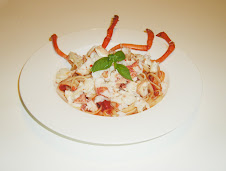
That evening, I prepared a toned down version of Lobster FraDiavolo with a high quality semolina linguini from Italy. Basically, I was able to put together a restaurant-quality meal for four of us, for less than $40. including the $7 pound of pasta.


2 Lobsters (3 lb total)
2 tbsp. Olive Oil
½ tsp. Chili Flakes (optional)
3 Cloves Garlic, minced
1 Shallot, minced
128 ounce can Muir Glen Crushed Tomatoes (or tomatoes of choice)
2 tbsp. Chiffonade of Basil
¾ lb. pasta cooked, al dente and drained

Place a stockpot with 2 inches of water on stove, salt (2 tsp) and cover; bring to a rapid boil. Quickly drop live lobsters into the pot and cover. Try to keep the boil high so that you don’t let the lobsters suffer more than they need to. Steam the lobsters for approximately 10-14 minutes. Remove and let cool. I save the shell and freeze it for future bisque use. Pull all of the meat out of the tail and claws, chop into bite-size chunks and combine with the juice from the shell. Meanwhile, get your sauce started - sautĂ© garlic and chili peppers in olive oil until lightly browned, then add crushed tomatoes straight from the can. Season the sauce with a little salt and lower the flame to a simmer. After 10 minutes add the basil and continue cooking for another 10 minutes. Now toss the lobster and juice mix into the sauce in pan and heat through. Finally, toss the cooked pasta into the pan and swirl. It’s ready to serve.

We had the pasta dish with toasted Buona Forchetta baguette, rubbed with raw garlic and Vermont Creamery butter. This meal took ½ hour to prepare. Not a bad choice for a Tuesday night. Brought me back to my days of living in Maine.